The real cost of conveyor wear on a high-tonnage line
Carryback, impact at the transfer point and a belt that will not track: three wear paths that cost more over a year than the failure everyone is watching for.
In mining, a conveyor that keeps turning is usually taken to be a conveyor that is fine. On a high-tonnage line the largest cost is rarely the sudden failure — it is the wear that runs every day and never stops.
Material that sticks to the belt and rides back with it — carryback — can cost more over a year than the belt it came off.
1. Belt cleaning and carryback
Choose the wrong cleaner, or let the adjustment drift, and material returns into circulation and builds up on the rollers, the pulleys and everything under the conveyor.
- Spillage, and the cleaning bill that comes with it
- Shorter service life on rollers and pulleys
- Higher safety risk and unplanned stoppages
2. Impact loading at feeders and receiving hoppers
A hopper with no armour, or with the wrong liner specified, accelerates wear and shortens the odds on an unplanned stop.
- Rising overhaul costs on feeders and receiving hoppers
- Belt tears and damage to the carrying surface
- Blockages that interrupt production
3. Mistracking and slippage
When pulley lagging wears and rollers stop turning freely, the belt drifts off its centreline: the edges wear and drive force is lost.
- Shorter belt life
- More load carried by the drive system
- Lower throughput and higher energy use
Five parts, one system
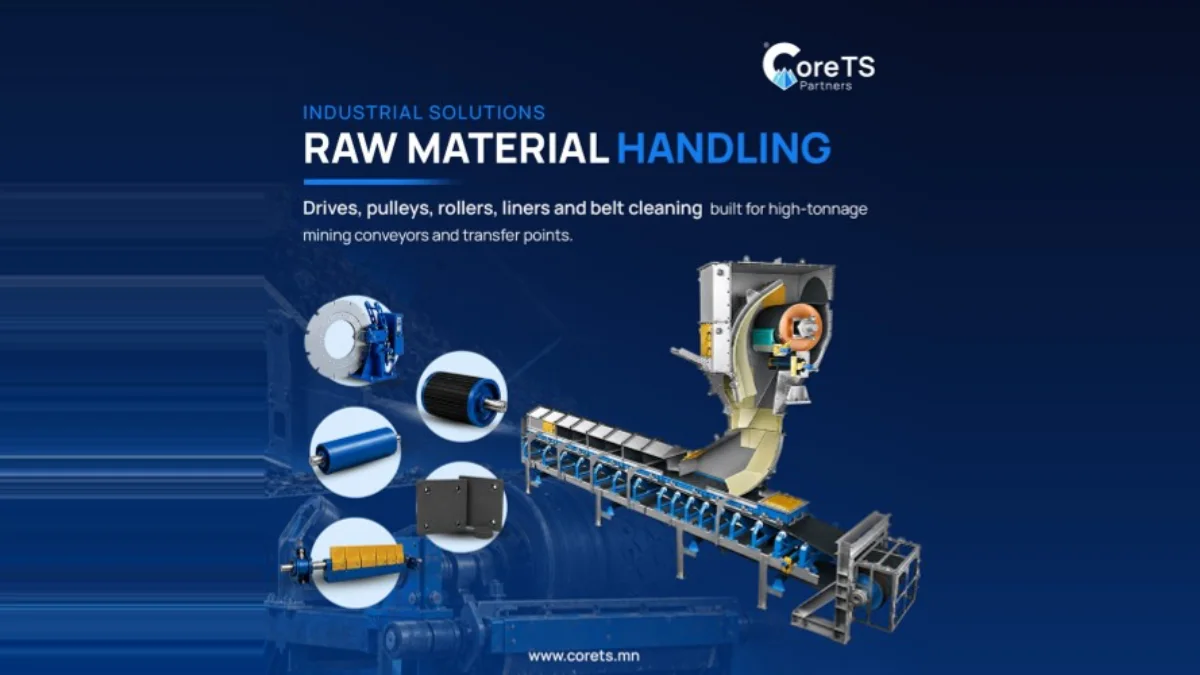
The drive, the pulleys, the rollers, the liners and the belt cleaning are not five separate items on an order. They work in one flow, and when one of them is specified badly the other four carry what it drops.
Core TS Partners does not only supply the equipment. We set the technical requirement, select the solution, then supply, install, commission and support it. Send us the key parameters of your conveyor and we will put together a wear package and a technical proposal for your conditions.